


SFMA Certification Course for CEU’s
Selective Functional Movement Assessment

SFMA Course Description
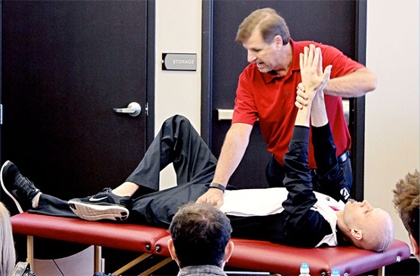
The Selective Functional Movement Assessment (SFMA) is a continuing education course designed for healthcare professionals that routinely treats patients with musculoskeletal conditions across their lifespan. Maintaining or restoring precise movement of specific segments is the key to preventing or correcting musculoskeletal dysfunction. SFMA focuses on finding the root and cause of symptoms by breaking down dysfunctional patterns logically rather than simply finding the source of the pain. An isolated or regional approach to evaluation and treatment will not restore complete function. When the clinical assessment is initiated from the perspective of a movement pattern, the clinician has the opportunity to identify meaningful impairments that may be seemingly unrelated to the main musculoskeletal complaint, but contributes to the associated disability.
What to Expect with SFMA Certification Course
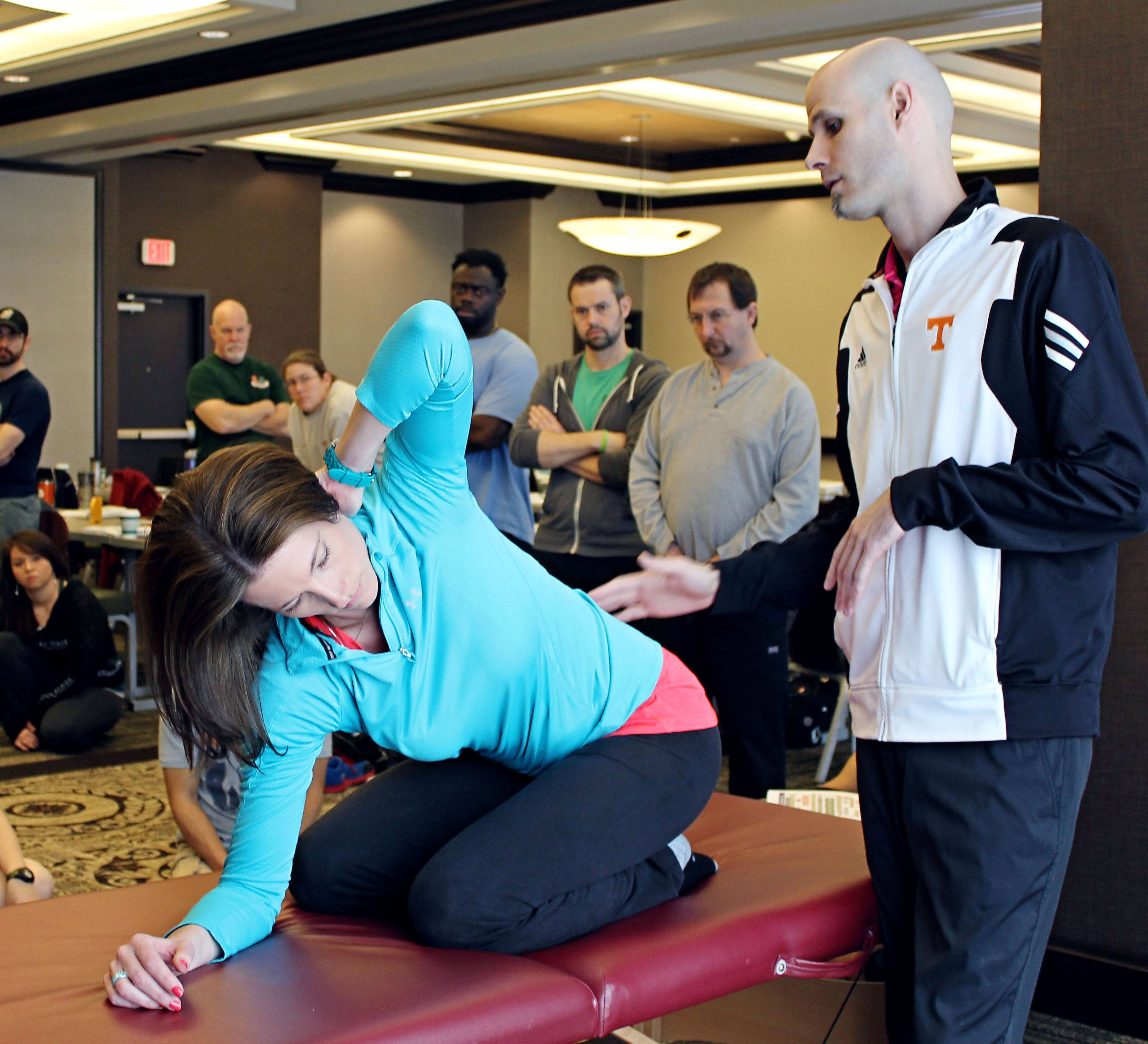 The goal of this SFMA certification course is to provide a standardized algorithmic system to identify impaired patterns of functional movement. The SFMA approach is designed to complement the existing exam and serve as a model to efficiently integrate the concepts of posture, muscle balance, and the fundamental patterns of movement into musculoskeletal practice.
The SFMA is a CEU course for physical therapists and other healthcare providers that introduces a new approach to the treatment of pain and dysfunction. By providing a standardized approach towards the assessment of fundamental movement, the SFMA model will allow for individualized exercise prescription and progression, which encompasses the concept of regional interdependence.
This course will cover the background, philosophy and evidence related to movement testing and regional interdependence in a lecture format. Then participants will enjoy a demonstration and laboratory sessions covering the full body movement tests and corrective exercise strategies of the SFMA. Participants will be taught the assessment criteria and ample lab time will be given to ensure the participants are comfortable integrating the tests immediately into their clinical practice. All of the information provided is practical, useful, logical, and can be incorporated into clinical practice immediately.
SFMA Online Video Prerequisite
Included with our SFMA certification courses is the new Level 1 Online Prerequisite course. Once the registration process is completed for the SFMA course access to online videos will be available. The videos will introduce the SFMA’s background, logic, top tier screens, and the breakouts for each of the top tier patterns. This is the first part of the SFMA Certification Process and will help prepare participants for the live course. Having a basic understanding of the SFMA logic and breakouts prior to attending the live course will allow for increased focus on improving assessment and treatment skills when participating in the lab sessions. Once you have completed the video’s you will have the opportunity to gain additional CEU’s by completing the online quiz.
Steps to Becoming SFMA Certified:
Advances in Clinical Education is a proud partner with Functional Movement in bringing you the Selective Functional Movement Assessment (SFMA) Certification Course.
- Complete the SFMA Certification Course Registration
- Complete the Online SFMA Level 1 Prerequisite course through FMS website with your login completed during the registration process
- Attend the course you registered for above
- Take the SFMA Certification Exam – The exam is available after the completion of the live course through the FMS website with your login
COURSE OBJECTIVES:
Following the completion of this SFMA certification course, the healthcare provider will be able to:
- Accurately describe the importance of identifying dysfunctional movement patterns without referring to notes in patients/clients with functional limitations.
- Accurately describe and competently demonstrate the seven basic evaluation components of the base SFMA examination on a patient model in less than 3 minutes.
- Independently explain the role of pain provocation during the examination process and list two ways in which pain alters motor control.
- Correctly identify typical movement pattern dysfunctions within a reasonable amount of time through the use of video case examples.
- Independently and competently perform a complete SFMA evaluation and all portions of the breakouts derived from the base tests in no more than 20 minutes.
- Independently analyze the information gained from the SFMA base screen and breakouts on a model patient to correctly identify the key impairments in order to establish a diagnosis.
- Design a rehabilitation intervention program based upon the video case SFMA key findings and list three appropriate exercises that will assist in normalizing the dysfunctional movement.
- Link the SFMA information to the initial therapeutic exercise strategy in order to formulate, describe, and defend the use of the most appropriate treatment interventions (manual therapy and functional exercise) into the traditional rehabilitation program to normalize dysfunctional movement.
- Justify the use of three acceptable manual therapy techniques to incorporate into a treatment program given a case with a mobility limitation.
- Evaluate the intervention effectiveness by monitoring the initial changes in the case dysfunction and impairment as seen on the SFMA re-evaluation in order to guide the therapeutic exercise progression.
SFMA COURSE OUTLINE
DAY ONE
08:00-12:30
- Principles And Concepts of Dysfunctional Movement Impairments
- SFMA Introduction: The Base Screen
- Integrating movement theory with practice (lecture-lab)
- Isolating Dysfunction With The SFMA
- Cervical Dysfunction Assessment (demonstration of breakout principles)
- Exercise Program – Progression Design: (Lecture/Lab/Participant Interaction)
- Developing a rehab program based on the SFMA
- Linking the results to exercise.
- Developing a rehab program based on the SFMA
- Corrective exercise selection based on the SFMA results
Question and Answers Session
12:30-01:30 – LUNCH
01:30-05:30
- SFMA Break-Out Assessments with Corrections (Lecture-Demonstration-Lab-Participant Interaction)
- Multi-Segmental Flexion Assessment
- Multi-Segmental Extension
- Spine Extension
- Upper Body Extension
- Lower Body Extension
- Question and Answer Session (Open practice time)
DAY TWO
08:00-12:30
- SFMA Break-Out Assessments with Corrections (Lecture-Demonstration-Lab-Participant Interaction)
- Multi-segmental Rotation
- Spine Rotation
- Spine Rolling
- Hip Rotation
- Tibia Rotation
- Multi-segmental Rotation
- Overhead Deep Squat
- Single Leg Stance
Question and Answer Session
12:30-01:30 – LUNCH
01:30-05:30
- Review of the SFMA – Putting it all together
- Case study presentations – small group discussion with instructors
- Where do we go from here?
- The Functional Movement Screen – An Overview
- Optional Assessments to increase the sensitivity of your evaluation
- Question and Answer – Case Study Session
SFMA CERTIFICATION COURSE
Selective Functional Movement and Assessment
16 Hours, 1.6 CEU’s Tuition: $945.00